Volleyball Timeout Rules: Number, Length and Technical Breaks
Learn how many timeouts teams get in indoor and beach volleyball, how long each break lasts, who may request one, and how competition-specific rules can differ.
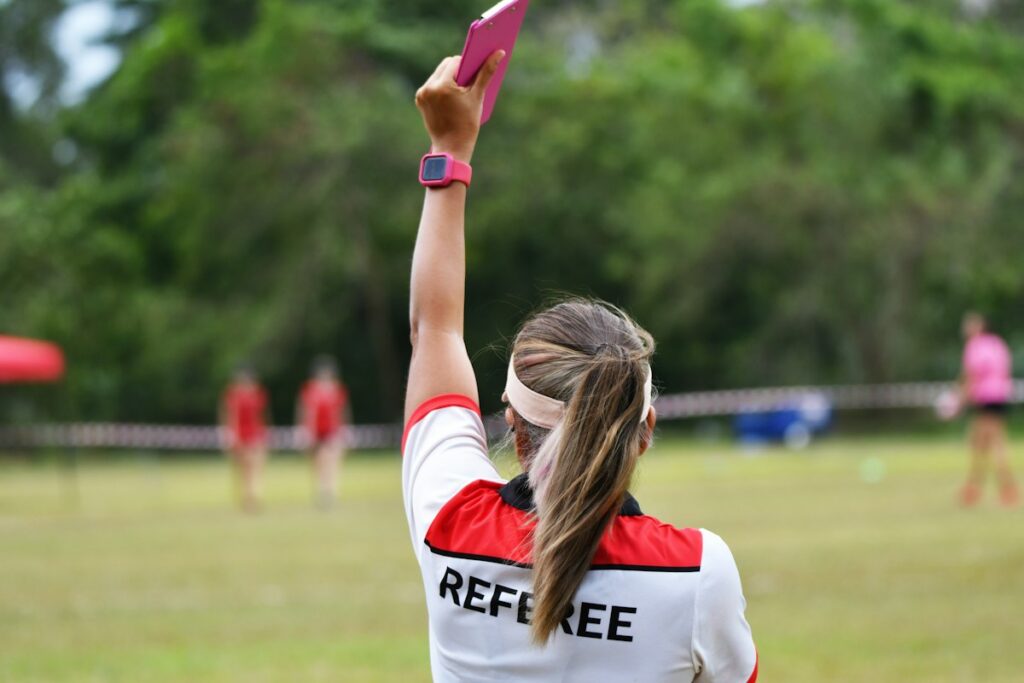
Volleyball timeout rules depend on the discipline and competition. In standard indoor volleyball, each team normally receives two timeouts per set, with each timeout lasting 30 seconds. Beach volleyball usually allows one timeout per team per set. Tournament regulations may add technical timeouts or adjust how breaks are administered.
Indoor volleyball timeout rules
Under standard FIVB indoor volleyball rules, each team can request a maximum of two timeouts during a set. A regular timeout lasts 30 seconds. The team’s coach or, in some circumstances, the playing captain requests the break through the proper officials or electronic request system.
A timeout can be used to settle the team after a run of points, change the tactical plan, disrupt the opponent’s momentum, or give players a short recovery period. A team does not receive extra timeouts if it does not use its allocation in an earlier set. Unused timeouts expire when the set ends.
When can a team request a timeout?
A timeout request is normally accepted only while the ball is out of play and before the next service whistle. The second referee or scorer confirms the request, and the officials control when play resumes. A request made after the whistle may be rejected or treated as an improper request, depending on the situation and the competition regulations.
Only an authorized team official can normally request a timeout. The playing captain may do so when the coach is absent or under the conditions set by the rules. Players should not leave the playing area until the referee has authorized the break.
Technical timeouts in indoor volleyball
Some major indoor competitions use technical timeouts in addition to the regular team timeouts. In the usual FIVB competition format, an automatic technical timeout occurs when the leading team reaches eight points and again when it reaches 16 points in sets one through four. These breaks are generally longer than a regular timeout, commonly 60 seconds.
Technical timeouts are not normally used in the deciding fifth set. Instead, teams change ends when the first team reaches eight points, without stopping the match for a technical timeout. The exact procedure can vary, so the event’s regulations and the pre-match briefing take priority.
Timeout rules in the deciding set
Teams still have their regular timeout allocation in a deciding set under the standard indoor format. The set usually has no automatic technical timeouts, so a coach must use one of the team’s permitted requests to stop play.
Teams also change sides during the deciding set when the leading team reaches eight points. The changeover must happen promptly and must not create an extra coaching interval beyond the break authorized by the officials.
Beach volleyball timeout rules
Beach volleyball uses a different timeout structure. Under the standard international format, each team is generally allowed one timeout per set, lasting 30 seconds. It cannot be carried into the next set if unused.
Major beach volleyball events may also use an automatic technical timeout. In the common best-of-three format, a technical timeout can occur when the leading team reaches 21 points in the first or second set. No technical timeout is normally used in the deciding third set. Event-specific regulations should be checked because organizers can publish procedures for the tournament.
Who controls a volleyball timeout?
The referees and scorer control the request, timing, and restart. Once a timeout is granted, players move to the area designated by the officials while coaches give instructions. The scorer records the timeout so the team cannot exceed its limit.
If a team requests more timeouts than it is allowed, the request is an improper request. The officials may reject it, record it, or apply a sanction if the request disrupts the match or is repeated. The consequence depends on the rules in force and the referee’s judgment.
Common questions about volleyball timeouts
How many timeouts are allowed in volleyball?
In standard indoor volleyball, each team gets two regular timeouts per set. In standard beach volleyball, each team generally gets one timeout per set. Competition regulations may add automatic technical timeouts.
How long is a volleyball timeout?
A regular indoor or beach volleyball timeout is normally 30 seconds. Technical timeouts in major competitions can last longer, commonly 60 seconds indoors and around one minute in beach volleyball.
Can a team call a timeout after the serve?
A timeout request must normally be made while the ball is out of play and before the next service whistle. Once the referee has authorized the serve, the request is usually too late for that rally.
Do timeouts carry over to the next set?
No. Unused regular timeouts do not carry over. Each new set starts with the timeout allocation specified by the applicable rules.
Are volleyball timeout rules the same in every competition?
No. FIVB matches, national leagues, school competitions, beach events, and local tournaments may use different technical-timeout procedures. The official competition handbook and the referee’s instructions determine the rules for a particular match.