Volleyball Net Touch Rule: When Is Contact a Fault?
Learn how the volleyball net touch rule works in indoor and beach volleyball, including legal contact, exceptions, antenna violations, and practical examples for players and spectators.
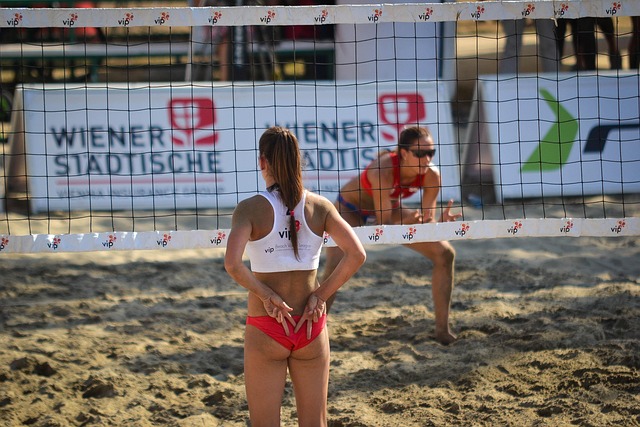
The volleyball net touch rule determines whether contact with the net results in a fault. In most situations, a player is penalized for touching the net between the antennae while attempting to play the ball, but not every contact is automatically illegal. The timing of the touch, the part of the net contacted, and whether the action interfered with play all matter.
What counts as a net touch fault?
Under standard indoor volleyball rules, a player commits a net fault when they touch the net between the antennae during the action of playing the ball. This area includes the net itself and the tape along its upper edge. The fault can occur while attacking, blocking, setting, landing, or making another movement connected with the rally.
A player may touch the net outside the antennae without committing the usual net-touch fault, provided the contact does not interfere with play. Contact with the posts, support cables, or padding is generally treated differently from contact with the playing net, although local competition rules can specify additional restrictions.
- Usually a fault: touching the net between the antennae while jumping to block or attack.
- Usually legal: brushing the net after the ball has gone out of play, if the contact is not part of the playing action.
- Not automatically a fault: incidental contact caused by the net moving into a player, rather than the player reaching into it.
When is touching the net legal?
The volleyball net touch rule does not punish every accidental brush. Contact can be legal when it happens outside the action of playing the ball. For example, if a player turns away after the rally has clearly ended and then touches the net, officials normally do not call a fault.
Contact may also be allowed when the ball drives the net into a player. The key issue is whether the player used the net or touched it as part of an attempt to play the ball. A blocker who lands into the net after making a block attempt can still be called for a net violation, even if the contact looks minor.
Players should not grab, pull, or use the net for support. Holding the net to regain balance, gaining an advantage by leaning on it, or preventing an opponent from making a play can lead to a fault even when the contact is not a dramatic collision.
Common examples during a rally
A blocker touches the top tape while reaching over the net: this is normally a net touch fault. An attacker’s hand follows through into the net after striking the ball: this is also normally illegal if the contact occurs between the antennae during the playing action.
If a player’s hair touches the net, officials generally do not call a fault unless the contact interferes with play. Loose clothing or equipment can be judged in a similar practical way. The referee focuses on whether the contact affected the rally rather than treating every incidental movement as a violation.
A player can reach over the net to block an opponent’s attack, but cannot interfere with the opponent before the opponent’s attacking action is completed. Touching the opponent, crossing under the net in a dangerous way, or contacting the net while trying to block may create a separate fault.
Net touch rule in beach volleyball
The beach volleyball net touch rule follows the same basic idea: touching the net between the antennae during the action of playing the ball is usually a fault. Sand can make net contact more likely because players jump and land less predictably, so blockers and attackers need to control their arms and body position.
Beach volleyball also places greater emphasis on two-player coverage and movement around the net. A player who touches the net while trying to save a ball may be penalized if the contact happens during that attempt. Contact after the rally has ended is generally not treated as a net fault unless it interferes with the opponents or the next action.
Net touch, center line, and antenna violations
A net fault is different from a center-line fault. A player may partially cross under the net with a foot if part of that foot remains on or above the center line and the movement does not interfere with the opponent. Crossing completely with a foot, interfering with an opponent, or creating a safety risk can produce a center-line violation.
The ball must cross the net within the crossing space, which is defined by the antennae. A ball that touches an antenna or crosses outside the antenna is out. Players also cannot touch the antenna or use it to judge whether the ball is in play. These antenna rules are separate from the standard volleyball net violation.
How referees judge a disputed net contact
Referees normally consider four questions:
- Did the contact occur between the antennae?
- Was the player in the action of playing the ball?
- Did the player use or interfere with the net?
- Did the contact affect the rally or create an advantage?
The most common mistake is assuming that “the net moved” proves a fault. The movement may have been caused by the ball, an opponent, or normal net vibration. Conversely, a light touch can still be a fault if it occurs during a block or attack. Players should focus on keeping their hands, shoulders, and landing path away from the net rather than relying on the referee to overlook small contact.
Quick answers about volleyball net contact
Can a player touch the net after hitting the ball?
It depends on the timing. If the follow-through or landing is still part of the action of playing the ball, contact between the antennae is normally a fault. Contact after the playing action has ended may be legal if it does not interfere with play.
Is touching the net with hair a fault?
Usually not by itself. Hair contact is generally ignored unless it interferes with the opponent’s play or affects the rally.
Can a blocker touch the net?
A blocker may not touch the net between the antennae while attempting to block. Even a small touch of the top tape can result in a blocking net fault.
Does the volleyball net touch rule apply to the posts?
The standard net-touch restriction concerns the net between the antennae. Contact with posts, cables, or padding is assessed separately and may depend on the competition rules and whether the contact interfered with play.