Volleyball Reaction Drills to Improve Defensive Speed and Court Awareness
Build faster responses for digs, blocks, and unpredictable plays with practical volleyball reaction drills that work in team training, at home, or on the beach.
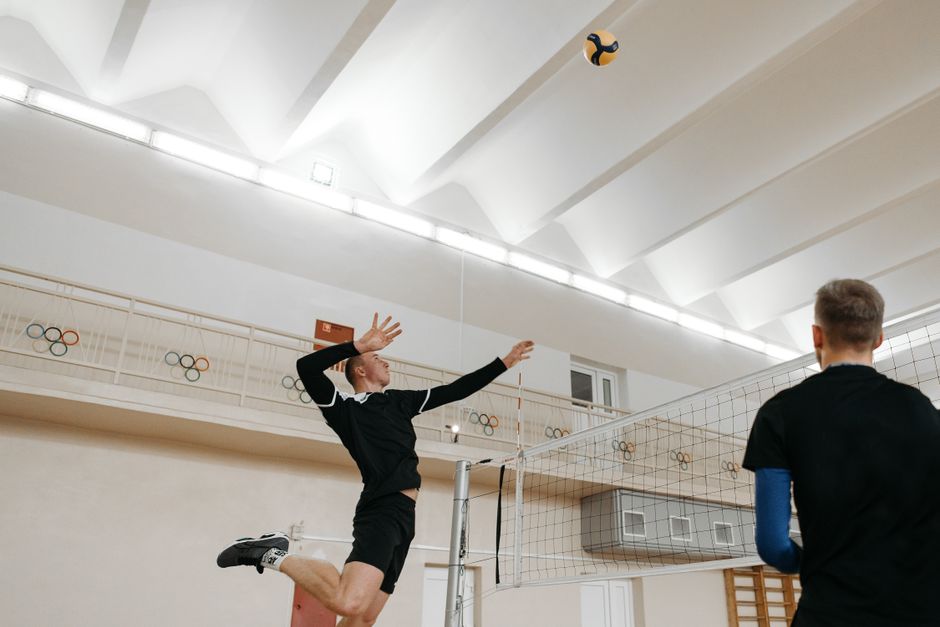
Volleyball reaction drills train the short delay between seeing the ball and moving into the correct position. That delay often decides whether a hard attack becomes a controlled dig or a point for the opposition. The best exercises do more than make players move quickly: they force athletes to read a setter, recognize the ball’s trajectory, stay balanced, and choose a useful defensive action.
These volleyball reaction exercises can be adapted for indoor courts, beach volleyball, school sessions, and clubs with limited equipment. Start with simple visual cues, then add changes in direction, unstable bounces, and realistic attacking patterns.
What volleyball reaction training should improve
Reaction speed is not only about fast feet. A player may move quickly and still arrive late because the first step went in the wrong direction. Effective volleyball reflex drills develop several connected skills:
- Visual reading: identifying the hitter’s shoulder, arm swing, contact point, and ball path.
- First-step speed: pushing off from a balanced defensive stance without crossing the feet too early.
- Decision-making: choosing between a dig, cover, block movement, or emergency save.
- Body control: stopping and passing accurately after a sudden lateral movement.
- Recovery: returning to a useful position after the first contact rather than watching the play.
For players in Africa, training conditions can vary widely. A full gym, ball cart, and several coaches are helpful but not essential. A partner, one ball, a marked playing area, and clear verbal cues are enough for many volleyball reaction drills.
Partner volleyball reaction drills
Point-and-move drill
The player begins in a defensive stance several metres from a partner. The partner points left, right, forward, or backward. The defender reacts with a quick first step, moves to the indicated space, stops under control, and returns to the ready position.
Keep the first movements predictable so the player can learn the correct technique. Later, delay the cue or use a ball held behind the partner’s back. The defender should watch the partner’s shoulders and listen for the call without guessing before the signal.
Drop-ball reaction drill
The feeder holds a volleyball at shoulder height and drops it without warning. The defender tries to catch it after one bounce, then progresses to stopping it with a forearm platform. Place the defender close enough to succeed at first; the aim is to develop a quick response, not a desperate dive.
To make this a more realistic volleyball defensive reaction drill, have the feeder vary the drop location and occasionally fake the release. The defender must stay low, keep the chest facing the court, and move the feet before reaching with the arms.
Colour or number call drill
Place coloured cones or numbered markers around the defender. The coach or partner calls one marker and immediately tosses the ball toward that area. The player moves to the cue, sets the platform, and passes the ball back toward a target.
This exercise links perception, movement, and ball control. It is especially useful for younger players because the visual markers make positioning easier to understand. With advanced athletes, remove the markers and use only hand signals.
Ball-based volleyball reflex exercises
Wall rebound drill
Stand a short distance from a wall and throw a volleyball against it from different angles. React to the rebound by passing the ball upward with the forearms. Change the height and speed of the throw, but keep the ball close enough to allow a technically sound contact.
A partner can make the drill less predictable by throwing from the side rather than directly in front. The player should avoid swinging the arms at the ball. Move the feet first, create a stable platform, and direct the shoulders toward the intended target.
Two-ball reaction drill
The feeder holds two volleyballs and releases one at a time from different positions. The defender reacts to the falling ball and passes it upward or catches it after the first bounce. This volleyball hand-eye coordination drill works well for liberos, defensive specialists, and setters who need to respond after a deflection.
Do not release both balls so close together that the exercise becomes a guessing contest. The player should have enough information to read the first ball while remaining ready for a second cue.
Deflection and recovery drill
A hitter or coach sends a controlled ball into a blocker’s hands or off a raised arm so that it changes direction. The defender starts in base position and reacts to the deflection, then immediately recovers toward the centre of the court.
This drill reflects a common match problem: the ball does not travel exactly as expected after a block touch. Begin with gentle deflections and increase the speed only when the defender can keep the pass playable.
Volleyball reaction drills for blocking and transition
Defensive reaction is also required at the net. A blocker must read the setter, move laterally, close the space beside a teammate, and land ready for the next action.
Setter-reading footwork drill
Place two attackers near the left and right antennae. A setter sends the ball to either side while the blocker watches the setter’s hands and the ball’s release. The blocker moves to the selected pin, forms the block, lands, and turns to prepare for transition.
At first, announce the target so the player learns the footwork. Then make the set unpredictable. The purpose of this volleyball reaction drill for blockers is not simply to jump higher; it is to delay commitment until the available information supports the decision.
Block-cover reaction drill
One player blocks while two teammates cover likely deflections. The coach sends attacks either over the block, off the hands, or into the open court. After the first contact, every player must react to the new ball position rather than remaining in the original formation.
This drill improves transition awareness because players learn that the play continues after a block touch. It can be run with a standing attack when space, equipment, or player numbers are limited.
Solo volleyball reaction drills with limited equipment
Solo training cannot reproduce every decision in a match, but it can sharpen foot speed and ball control. Use a wall, a rebounder, or a safe open area.
- Alternating wall passes: pass forearm-to-wall, move one step sideways, and repeat without allowing the platform to break apart.
- Self-toss movement: toss the ball slightly to one side, move behind it, and pass it high enough to make a controlled second contact.
- Random bounce response: bounce the ball at different angles and try to keep it playable with a forearm pass.
- Ready-position calls: use a timer or training partner to call directional movements, then finish each movement in a balanced stance.
Without a partner, focus on quality rather than maximum speed. If the ball repeatedly flies sideways, reduce the movement distance and correct the platform before adding difficulty.
How to structure a reaction session
Reaction work is demanding because it combines physical movement with rapid decisions. A useful session can begin with five minutes of dynamic movement, followed by simple visual cues and then ball-based drills. Finish with short game-like sequences while the player is slightly fatigued.
Use work periods of roughly 15 to 30 seconds followed by enough rest to preserve technique. For young or developing players, fewer repetitions with accurate movement are more productive than long rounds in which the defensive stance disappears.
Progress the exercises in this order:
- Give the player a clear visual or verbal cue.
- Add a movement before the ball contact.
- Vary the direction and timing of the cue.
- Require a controlled pass or defensive action.
- Add a second decision, such as recovery or transition.
Common mistakes in volleyball reaction training
Starting from an upright position: A tall stance makes the first step slow. Keep the hips lowered, weight on the balls of the feet, and shoulders slightly forward.
Guessing before the cue: Anticipation has value in a match, but guessing during a drill can hide poor reading. Change the direction often enough that the player must respond to information.
Reaching instead of moving: A late lunge may rescue one ball but does not build repeatable defence. Reduce the distance until the player can move the feet and create a stable platform.
Adding speed too soon: Fast, inaccurate repetitions reinforce bad habits. Increase the pace only when the player can control the ball and recover into the next position.
Frequently asked questions about volleyball reaction drills
Which volleyball reaction drill is best for beginners?
The drop-ball drill is a practical starting point because the player can clearly see the cue and control the difficulty. Begin with a catch after one bounce, then progress to a forearm pass as movement and confidence improve.
How can I improve reaction time for volleyball at home?
Use wall rebounds, self-toss passes, and short directional movements in a safe space. A partner can make home training more realistic by changing the release point and timing, but a wall and one ball are enough for basic hand-eye and footwork work.
Are reaction drills useful for beach volleyball?
Yes. Beach players need to react on an uneven surface, cover more space with fewer teammates, and adjust to wind-affected balls. Run the drills at lower intensity first, keep the knees flexed, and include movement in multiple directions rather than only side-to-side work.
How often should volleyball players train reactions?
Short reaction sessions can be included two or three times per week, usually during warm-ups or technical practice. High-intensity work should be reduced when players are tired enough that footwork and passing accuracy begin to decline.